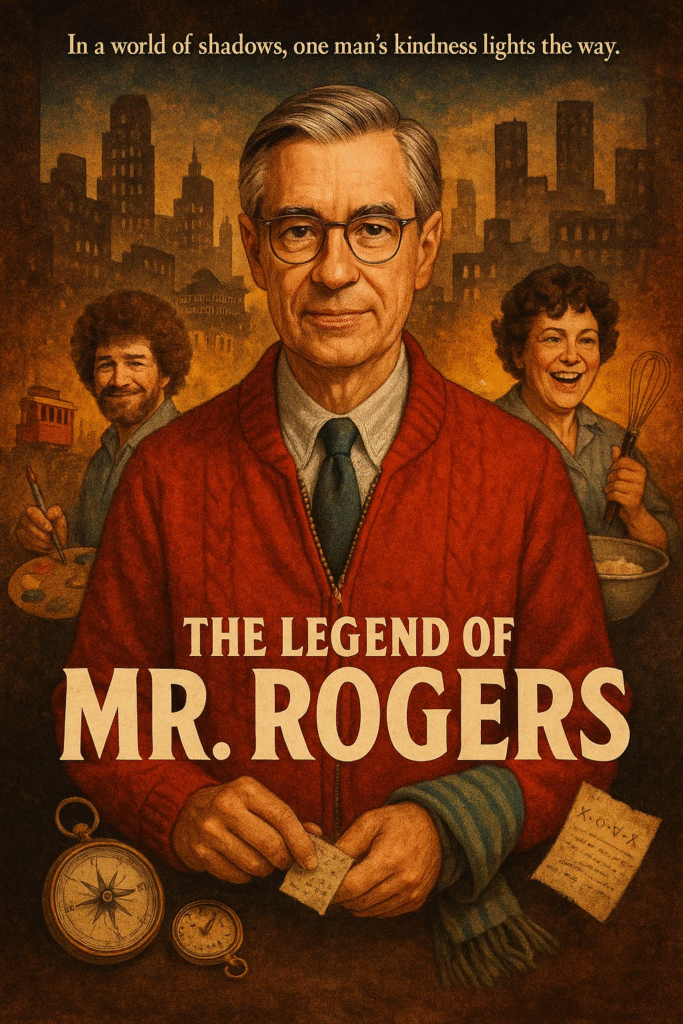
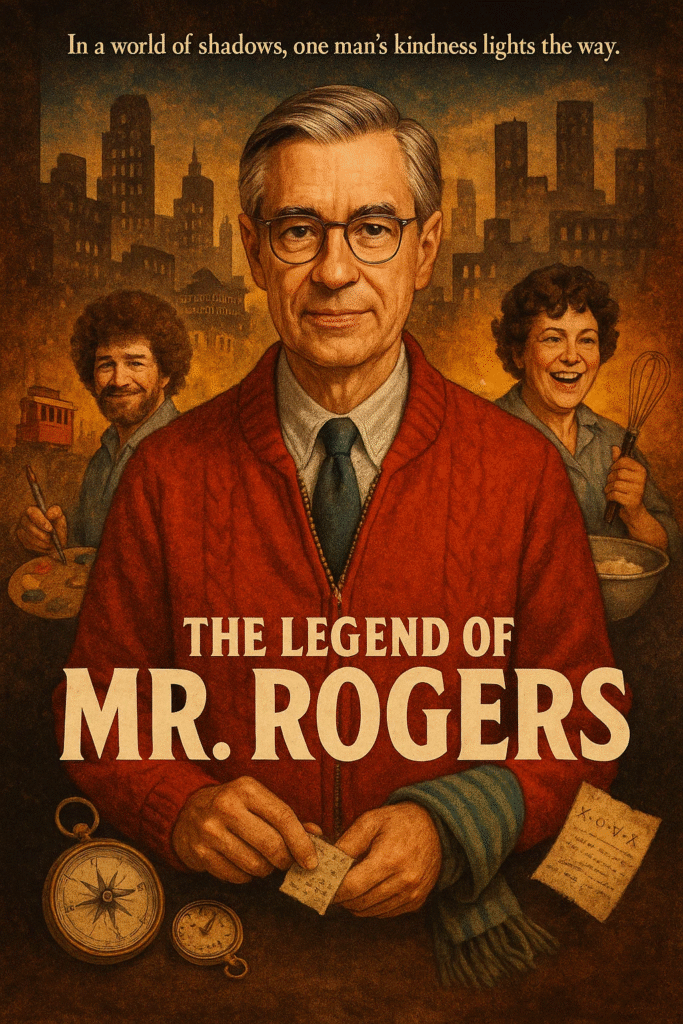
Chapter Two cracks open the story’s ribs—listen close, because this is where the heartbeat changes.
Chapter 2: The Undercurrents and the Gathering Storm of Ambition
The city pulsed with the vibrant, sometimes dissonant, symphony of the mid-1970s. Bell-bottomed pedestrians swished past him, the insistent beat of disco music pulsed from open car windows, and the weary groans of air conditioners blended with the distant, rhythmic shouts of street vendors.
Mr. Rogers, guided by his unique blend of intuition and meticulous observation—a radar for the emotional landscape of the urban sprawl—found himself tracing Timothy’s path towards the bustling docks. The young artist, it seemed, had been drawn to the raw, visceral energy of the waterfront, a place where the grime of industry often collided with the spontaneous, uninhibited spirit of burgeoning art.
He walked with his characteristic, unhurried gait beneath a massive scaffold where a new high-rise, a steel skeleton against the sky, was slowly ascending, its unfinished frame glinting like an audacious promise in the afternoon sun. A burly construction worker, his face a mask of sweat and grime, was bellowing directions to a crane operator, his voice rough as raw sandpaper, cutting through the din.
As Mr. Rogers passed beneath the dizzying heights, the worker abruptly stopped, his hard hat tilting back. His hardened gaze, accustomed to measuring girders and assessing risk, suddenly softened, then widened in startled recognition.
“Hey! You! Mr. Rogers!” the man bellowed, his voice momentarily cutting through the cacophony of the construction site like a sharp, clear whistle. He lumbered over, wiping his hands on his denim overalls, his expression shifting from gruff authority to unguarded awe.
“It is you! Jimmy ‘The Hammer’ Harrison! You probably don’t remember, but you talked me out of quitting that plumbing apprenticeship back in ’68, when I was sure I was useless, a washout. You said, ‘Every single day, Jimmy, we’re learning something new about ourselves, and that, my friend, is a truly remarkable thing.’ Best advice I ever got! My son’s going to college on plumbing money now, thanks to you talking sense into my thick skull!” He clapped Mr. Rogers heartily on the shoulder, a blow that would have sent a lesser man reeling, but Mr. Rogers, surprisingly grounded, merely swayed slightly. “Just wanted to say… thanks, neighbor. You always had a way of seeing the good in folks, even when they couldn’t see it themselves.”
Mr. Rogers, subtly adjusting his balance, offered a warm, genuine smile that seemed to momentarily illuminate the harsh construction site. “It’s a wonderful feeling, isn’t it, Jimmy? Knowing you built something lasting, not just with your hands and those pipes, but with your perseverance. Something good for your family.”
He continued on, a small, knowing smile playing on his lips. His unique brand of investigation—one part keenly honed observation (a skill sharpened in much harsher landscapes than this urban sprawl), two parts radical, unflinching empathy—was proving astonishingly effective in the often-callous urban jungle. He’d learned, from his time in Vietnam’s shadowy forests, that true understanding wasn’t about brute force or harsh interrogation, but about connection—finding the unseen currents that moved people, the hidden narratives beneath the surface.
But not everyone in the intricate, often cutthroat dance of the detective business shared his quiet, humane philosophy. Across town, in a sleek, coldly modern office of polished chrome and tinted glass, two men in impeccably tailored suits studied a grainy, poorly lit photo of Mr. Rogers, tacked to a dartboard. “Rogers Investigations,” the crude, mocking target read, pierced by several darts.
“The old man’s cutting deep into our missing persons market,” sneered Sterling Thorne, his voice a low, reptilian hiss, barely concealing a simmering rage. Thorne was the slick, ambitious, and utterly ruthless head of Thorne & Associates, a firm built on aggressive tactics, corporate espionage, and a chilling, almost celebratory, disregard for ethics. “All this ‘kindness’ and ‘neighborly’ nonsense. It’s bad for business, Brick. People are starting to prefer his… methods over ours. He makes us look… inefficient.”
His partner, a hulking, silent man named Brick, grunted, his eyes unreadable, like dull stones. “He found the Senator’s kid in three days. Took us a week just to get a lead on that one, and we had the inside track, paid off half the department.”
“Exactly,” Thorne spat, a dart glinting in his hand as he plucked it from the board with a sharp snap. “He needs to be… redirected. Permanently. The city needs to remember who really controls the flow of information, where the real power lies, and who isn’t afraid to use it.” He aimed the dart, with chilling precision, at Mr. Rogers’s forehead in the photo, a malicious gleam in his pale eyes. “We’ve got a new, high-profile missing persons case coming in, a very valuable art collection, vanished without a trace, and the collector’s son seems suspiciously involved. Let’s make sure Mr. Rogers gets tangled up in it. In a way he won’t untangle easily. And when the dust settles, his little ‘Neighborhood’ will be nothing but a forgotten address, a quaint, irrelevant memory.”
The trap was already being set, a meticulously crafted web designed to ensnare a man who only sought to help, a gentle soul in a ruthless world. Timothy’s case, which had innocently led Mr. Rogers to an unassuming art commune, was about to become the unsuspecting conduit for a far darker, more sinister scheme. The quiet currents of kindness were about to collide head-on with the turbulent undercurrents of pure, unadulterated malice. The storm, long brewing, was about to break.
The Gentlest Touch and the Echoes of a Distant War
Before the chase begins, before the conspiracy unfolds—there’s the man you think you know.
🎧 Listen to the audio version:
The bell above the door of “Rogers Investigations” chimed, a friendly, almost melodious sound that had, over the years, become synonymous with a fragile glimmer of hope for the lost and the found. It was 1974, and outside, the city was a tumultuous kaleidoscope of changing times: flared pants and platform shoes, the distant rumble of social unrest, and the faint, optimistic strains of a new pop song bleeding from a passing car. Inside, however, time seemed to deliberately slow, held captive in the amber glow of a single desk lamp, the comforting, almost nostalgic scent of pipe tobacco and faint lavender, and the quiet, immovable presence of Frederick Rogers. His familiar red cardigan, today, was a vibrant splash against the calming, neutral tones of his office, its fabric a soft, reassuring balm against the anxieties of the world. He sat behind a sturdy wooden desk, not polishing glasses now, but meticulously cleaning a small, well-worn pocket compass—a deeply ingrained habit from a life long past, a silent meditation on true north. The cool, smooth brass felt familiar in his palm, a ghost of a weight from another time, another purpose.
His current client, Mrs. Gable, was a living embodiment of profound grief, her handkerchief a sodden, crumpled mess. Her son, Timothy, a budding artist with a soul as vibrant and unpredictable as his canvases, had vanished three days prior, leaving behind only the haunting quiet of his absence. The police, efficient but perpetually overburdened, had, with polite finality, labeled it a typical case of youthful wanderlust. “He left a note,” Mrs. Gable whispered, her voice a fragile, brittle thread, “about ‘finding inspiration.’ But Timothy wouldn’t just leave without telling me. Not truly. We… we’re close, Mr. Rogers. He always told me everything.”
Mr. Rogers listened, truly listened, with an intensity that seemed to absorb every tremor in her voice, every unspoken fear in her eyes. His gaze was unwavering, deep with an understanding that transcended mere words, rooted in a quiet empathy few possessed. He didn’t interrupt with standard investigative questions about Tim’s habits, or his friends, or even his last known whereabouts. Instead, he asked about the way Timothy hummed when he was happy, a specific, off-key melody. He inquired about the color of light he loved most—the bruised violet of pre-dawn, perhaps? He asked about the tactile pleasure of his favorite brushstrokes, the subtle scent of his preferred oil paints. He listened, with every fiber of his being, to the unspoken language of a mother’s heart, the subtle, unique cadences of her private sorrow. “Sometimes, Mrs. Gable,” he said, his voice soft, yet resonating with a gentle, undeniable authority, “the most important notes aren’t written down at all. They’re felt, here,” he tapped his chest gently, over his heart. “And a mother’s heart, Mrs. Gable, has a very good ear for those unwritten messages. For the true north of a child’s spirit.”
He assured her, not with glib promises of a swift, miraculous return, but with a quiet, resolute commitment to diligent, compassionate attention. As Mrs. Gable finally rose, a faint tremor of nascent hope settling in her shoulders, the bell chimed again. An elderly woman, no taller than Mr. Rogers’s elbow, her frame stooped with the weight of years but her eyes bright with a spark of immediate recognition, peered into the office. She wore a faded floral apron, perpetually smelling of flour and a faint, sweet spice, and in her gnarled hands, she carried a wicker basket from which wafted the irresistible aroma of warm sugar and cinnamon.
“Mr. Rogers? My goodness, is that truly you?” Her voice was thin, but it carried the unexpected clarity of a distant memory. “It’s Beatrice! From the old neighborhood on Elm Street! My goodness, I haven’t seen you since… since you helped little Mikey find his teddy bear under that runaway bus at the Fourth of July parade! He’s a grandfather now, you know! Still talks about ‘the kind man’ who wasn’t scared of anything.”
Mr. Rogers’s smile unfolded, a genuine, radiant thing that seemed to banish any lingering shadows. “Beatrice! My, it’s been a long time. And how is Mikey doing these days? Still as adventurous?”
Beatrice bustled into the office, setting her basket on the corner of the desk, its contents briefly overwhelming the lavender scent with its comforting sweetness. “He’s grand, absolutely grand! Here, I made too many for just myself. You take some, dear.” She pressed a warm, slightly sticky cinnamon bun into his hand, her eyes twinkling with unreserved affection. “You always were a good neighbor, Mr. Rogers. Always. Even back then, you had a way about you, even as a young man. A quiet way of seeing things others missed, of knowing just where to look. Not many folks have that.” Her words hung in the air, a subtle nod to the precision honed not in a classroom, but in the unforgiving jungles of Vietnam, a past that still lingered in his preternaturally sharp senses, though rarely spoken of directly.
As Beatrice finally departed, leaving behind a lingering warmth and the sweet scent of baking, Mr. Rogers turned back to Timothy’s case file. He picked up the crumpled note again, not for the scrawled words, but for the almost invisible indentations on the paper where a pencil had pressed hard, drawing something beneath the actual message. He’d helped a lot of people find lost things, over the years. Some were simple toys, tucked away in forgotten corners. Some were pieces of themselves, fractured by life’s cruelties and hidden deep within. And some, like Timothy, were simply lost children, no matter their chronological age, searching for their own neighborhood in a world that often felt too vast, too loud, and too indifferent. He knew where to start looking, not in police reports, but in the quiet, unconventional places where creativity bloomed and, sometimes, people got a little too inspired, forgetting the path home.
What if Fred Rogers was wrongly accused of a crime—and the only weapon he had was kindness?
The Legend of Mr. Rogers is a character-driven mystery, a reimagined tale of empathy, resilience, and quiet rebellion. Told in audio and text, this novella unfolds weekly—one chapter at a time.
It starts here, with a personal prologue about why this story had to be told… and how a childhood hero can still save us today.
🎧 Audio below.
“Improvised Personal Prologue.”
“…”
“The Legend of Mr. Rogers Prologue.”
They say that when a star falls, it leaves a trail of light across the night sky. Frederick Rogers saw it as a silent, steady climb rather than a dramatic, abrupt plunge, leaving a trail of kindness that glistened in the deep shadows of a world that was all too quick to embrace darkness. Though life, in its infinite and frequently ironic wisdom, frequently puts the unlikeliest of souls in the most extraordinary of circumstances, he wasn’t born for the headlines or the high-octane thrill of a spy novel’s plot twists that was his hidden life. No, Fred wasn’t born for it. He was thrust into it. Some knew him as the gentle voice from the flickering screen, a comforting, familiar presence in living rooms across a nation increasingly in flux.
They pictured him, always, in his brightly colored cardigan, tending to puppets and singing simple, profound songs of friendship. And in a way, they were undeniably right. He was, fundamentally, all of those things. But beneath the soft, reassuring fabric of his knitted sweaters beat a heart that had navigated terrains far rougher and stranger than the Neighborhood of Make-Believe could ever conceive.
Before the gentle, rhythmic hum of a miniature trolley, there was the silent, almost imperceptible hum of a sniper’s nest in the humid jungles of Vietnam—a past he rarely spoke of, a deadly precision he rarely displayed. Before the quiet wisdom shared with wide-eyed children, there were the sharp, observant instincts honed in the covert operations that shaped a forgotten, unwritten chapter of his youth. And after the television cameras finally ceased their rolling, when most expected him to settle into a well-deserved, quiet retirement, Frederick Rogers, with an unmatched, almost supernatural ability to connect with anyone, truly anyone, became something far more remarkable than a mere retiree.
He became a sought-after negotiator, a private eye whose methods redefined the very essence of investigation. He used his gentle demeanor and quick, incisive wit to unravel the most complex of cases, specializing in the heartbreaking quiet of missing persons, bringing a unique brand of justice to his clients not with force, but with a profound understanding of the human heart. He spread an unwavering love and a quiet, persistent kindness even in the face of imminent danger, often going above and beyond the call of duty, willingly putting himself in harm’s way without a second thought, his empathy a shield, his wisdom a scalpel.
But in the gritty, unforgiving underbelly of the city, there were those who viewed his unconventional methods as a dangerous novelty, his surprising success an intolerable affront. A rival detective agency, built on cutthroat tactics, ruthless ambition, and a chilling disregard for ethical boundaries, was determined to systematically dismantle his burgeoning reputation, to steal his hard-won clients, to silence the gentle giant whose light exposed their shadows.
And in their desperate, calculated bid for supremacy, they framed him for a heinous crime he didn’t commit, a masterpiece of misdirection designed to destroy him. So, Frederick Rogers, the kindest man in the world, found himself thrust onto the cold, unforgiving streets, an unlikely, friendly fugitive, forced to navigate a treacherous world, yet still spreading love and kindness wherever he went. He would come to realize, in the crucible of his flight, that sometimes, even the most profound kindness can’t truly fix what’s fundamentally broken. But it can, in its own quiet, profound way, illuminate the path to healing, to understanding, and ultimately, to a hard-won justice. This is the untold story. The myth. This is the legend of a Mr. Rogers.
By Aeric Adams FilmScribe / Forked Up – Cinematic Critic, Chaos Enthusiast & Sentient Popcorn Bucket Published: July 2025
🍿 Quick Verdict
“Better than most of the live-action Transformers movies combined—and somehow has more soul.”
⭐ Rating
★ ★ ★ ★ · (4 stars) – 89% Certified Fresh
📽️ The Rundown
Directed by Josh Cooley, featuring voices by Chris Hemsworth, Brian Tyree Henry, and Scarlett Johansson. An animated origin story exploring the formative journey of Optimus Prime and Megatron. Runtime: 1 hr 36 min. In theaters now.
🎭 What Works
A layered hero’s journey that actually feels earned.
Voice performances that bring emotional depth—Hemsworth for the ladies. Scarlett for the fellas.
Visuals that let character shine instead of just chasing explosions.
Clever narrative surprises that don’t feel shoehorned.
💤 What Doesn’t
A few tonal shifts feel rushed.
Some scenes might be leaning too heavily on viewer nostalgia. Eh-I’m Gen X…so-thanks.
One or two punchlines fall flat. Man I am trying! It’s good.
🧠 Aeric’s Take
I came for the clang of metal and ended up feeling something. Transformers One pulls off a rare feat: it makes you care about mythic robots before they were gods—or villains. There’s heartbreak. Brotherhood. Betrayal. It slows down enough to let the heart breathe before the machinery war begins.
This is why myth matters: because action without purpose is just chaos.
🎞️ Best Scene (SPOILERISH)
That cliffside confrontation—Optimus and Megatron as still-friends teetering on the brink of fate, with no soundtrack or fanfare. You feel every…gear…grinding.
🎯 Final Word
Transformers One is a thoughtful, surprisingly poignant reboot; a metallic fable that hums long after the credits roll.
Drugs are the most lucrative product in the world . Sex is the second. Power is a product, but who can afford it? Illusion and hypnosis are third.
Hypnosis? Illusion? Poppycock?
Turn off my brain with plays, television, movies, music, and stand up comedians. Magicians, weave a magic spell that will float me away to oblivion and ease the trauma of my existence! Help me forget. Get me outside the pressures of my life, and I will pay you. You can even sneak sell me something if, and only if, you can take my breath away. But not all creatives follow the “breath-taking” rules.
We allow people to take power over our consciousness to make us feel good. Sometimes feeling bad is feeling good. There’s good-bad and bad-bad. It feels good to let go and float along without having to make decisions or work too hard. Insert commercial here.
WE Are ENTERTaInED. It almost sounds like candy. Harmless. “It’s entertainment.” Like a clown.
Entertainment is not candy. It can be but that is not all it is. Fairy tales have been perverted. The original Grimmes Fairy Tales show deep insight into the human psyche. It shows us how to navigate society. These are archetypes. Movies can make you think. They can inspire bravery. Music can unite nations.
There is a fight for your attention. People are dying out here to get you to look at them or their people. Everyone knows about Vanilla Ice and Suge Knight for example. If you are paying for Drake then you are not paying for another artist. People kill for thousands. Do you think it’s a harder decision to kill for millions? This is how big the fight is.
The mind is like putty, mixed with a flash drive. Remember the girl who thought she was a dog? The goal is to first acquire it, then shape and mold it as you will. Not all commercials are thirty seconds long. Some are over an hour, like a really intense commercial. Enter Snow White; food for the mind. This is how MK Ultra works.
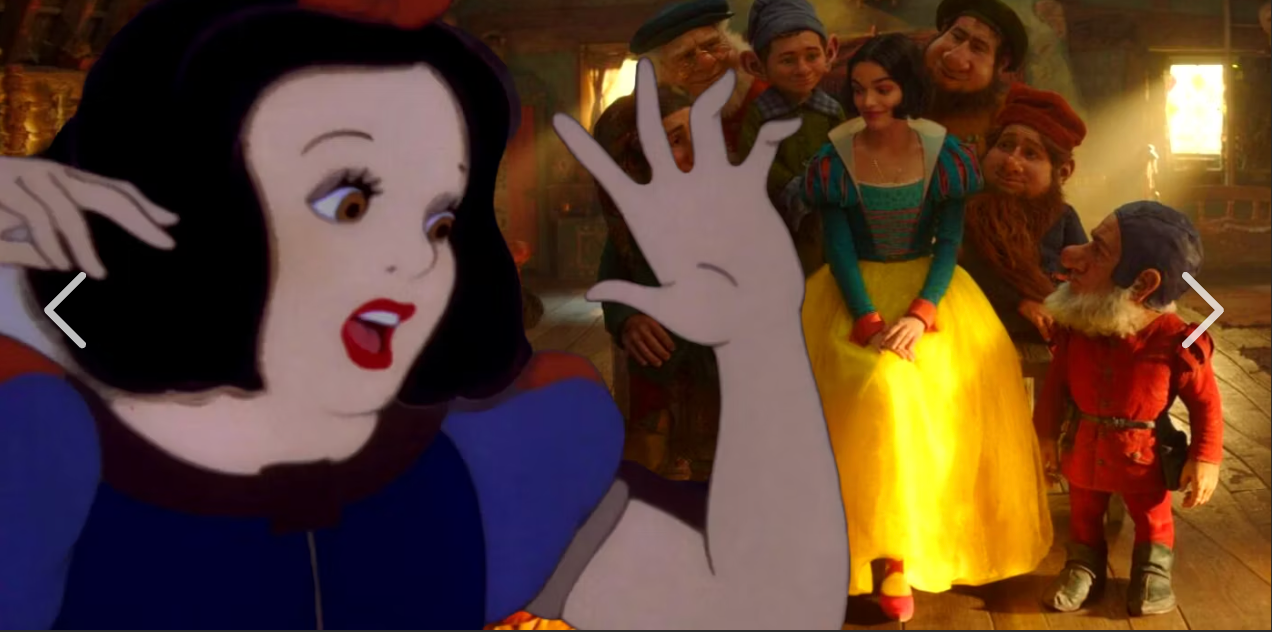
Snow White is a movie by committee with the soul of AI. It’s empty calories with no nutrients, or rather anti-nutrients. This movie is societal propaganda. It’s meant to hypnotize us to agree with “their” agenda. It perpetuates a lack of critical thinking while also alienating the appropriate audience. The colors look nice though.
Snow White is dangerous. Like all media, our minds digest it and make food for our dreams.
Image by tookapic from pixabay
SNOW SHITE and the SEVEN BLUNDERS:
ONE: HUBRIS! PURE HUBRIS!
Be Bashful: Confident arrogance, with a dash of ignorance.
Snow White was “weak?” The prince is a “weird stalker?” Stop talking. Romance and wanting love are outdated? These are blemishes cast upon us from a patriarchal system? “I only saw the old cartoon movie once.” That’s what she said! Your “friend,” Rachel. You have been Zeglered.
It was made 85 years ago. You’re remaking an old movie. Literally. The movie is based on a Fairy Tale. Isn’t the point that it’s dated? And also maybe old things have value. If we colonize Mars, will people be saying, “the Earth is sooo 2024?”
Boomers are people too, millienials. Boomers are the reason you have the internet. Respect. And neither generation is perfect. I am generation X. We have Puff Daddy. We are the latchkey kid generation raised by television. We are the lost Mad Max generation. We eat national crisis for breakfast. You merely adopted prejudice; we were born into it. You don’t remember when Disney was magic and there were no “midi-chlorians.”
On this stalker prince: When’s the last time a real prince sang to you, below your window, after seeing only a glimpse of you? Oh, and he’s a handsome prince. And he’s got money and a sword to protect you. Okay, times up. Never! No prince has ever sung to you “One Song” for your poor broke self.
Snow White was actually wearing rags. “Rach” called that guy creepy. “She blockin Yo!” If you have a friend like that, she may have talked you out of the love of your life. Sorry to be the bearer of bad news. He kissed her dead body and brought her back to life! “Some people” would police this man. Is the Illuminati trying to stop people from being romantic? What kind of Karen would want to throw this man in jail, so Snow can sleep forever? A jealous one. That’s who!
You think Ms. White should focus on her career, telling dwarves how to clean, while she accepts free room and board? “Clean your room and pay me!” she sings sweetly. “If a hag gives me a poisen apple to eat, make sure no rich, brave prince with a great voice kisses me.” she croons bossily. This film will teach children? She should rule them because, they are short?
What man or woman could walk into anyone’s house and tell them to clean it and also feed and house her/him? CGI men-dwarves should clean? What would Cardi B do? Or Megan the stallion!? Or Beyonce?! “All my single ladies!” Offering inside : the privilege of being softly bullied by a princess.
See? The film is darker than you thought.
Two: POCAHONTAS MATTERS
Snow Snizzy
Generated by Leonardo AI
Pocahontas wanted all the colors of the wind. White is in the crayon box too. Yes, fight malicious authority, but we have to live with the colonizers. We can’t deny them identity, like revenge for all cultures of color. Cultures need their myths and legends. Identity is memory. It’s why the “African Dispora” in America get so upset about it. Cultures can disappear.
I do want my Asians Asian and my Africans African. Next to that, get a great actor and I don’t care about the color. Meryl Streep has my permission to play Black Panther if she believes she can do it. Same for Daniel Day Lewis. But if Rhianna was to play the Disney princess, would we have to call it Snow Black? Or Snow Brown or Chocolate Brown?
The powers that be are tone deaf and have been since before The Princess and the Frog. You get a chance to show black folks you love them and turn the princess into a frog. At least we got one. It’s like when you try to help something, but then end up tripping. And everyone sees you, so you become self conscious, become more clumsy, and trippy, and suddenly the studio is on fire. They were just trying to help. This is Snow White, but with millions of dollars.
There may be a formula for feeding the soul. Feeding the soul is money. But we are not machines. Many think we live in a mechanistic universe. We are little boxes in other boxes. Like those Russian dolls. That’s not life and that’s not something to strive for. And the “food” created is bad. No flavor or depth, sprinkled with addictive chemicals. Intangible flavorings.
Superhero movies are formulaic, but you can’t just put a cape on some random dude and make a billion dollars. You can’t make any cookie-cutter superhero movie and think people will show up. The hero’s journey is sacred, like that battle of good verses evil. Marvel was doing alright with the hero’s journey, but they got stuck on the sky beam, and the villains were vapid. The human condition is thriving to be better like all things. To strive. Believing we can be better than our mundane selves is a superhero.
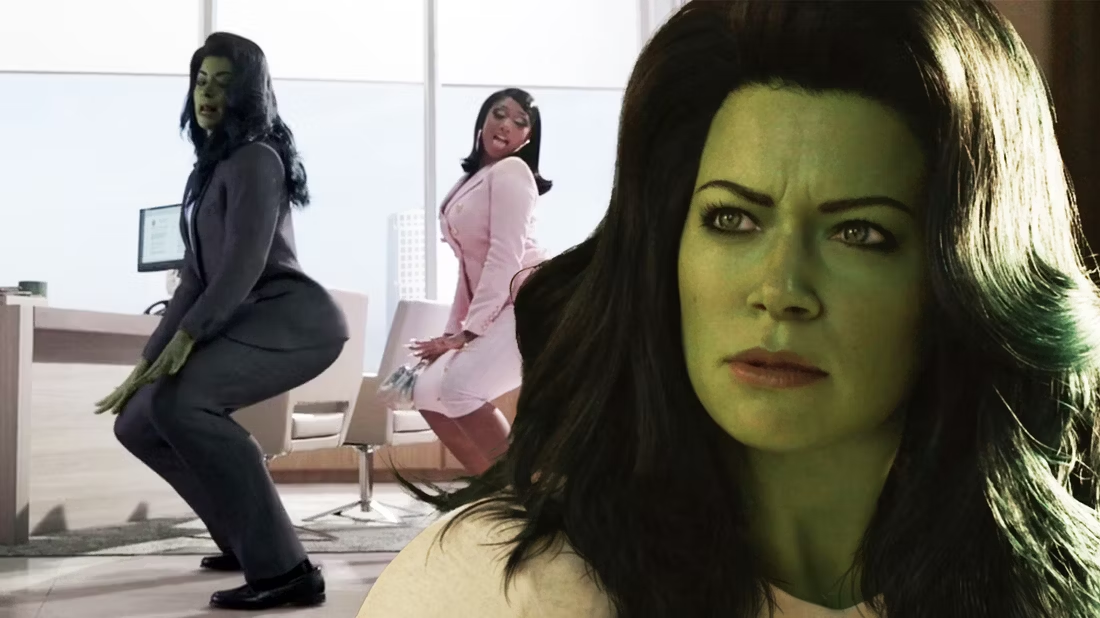
It’s a shame that many won’t know the depth of the comics your children are reading (the She-Hulk comic is better than the series). Delimas you can feel, feel real, and are grounded in true human dramatic situations. Not just sky beams. These stories, before they hit the big screen, contain deep character development. They contain moral dilemmas that would make Neitchze scratch his head and Freud cry to Mama.
Do the right thing by giving people what they want and need. How did enforcing selfish behavior to kids make it all the way to production? How were they so shortsighted?
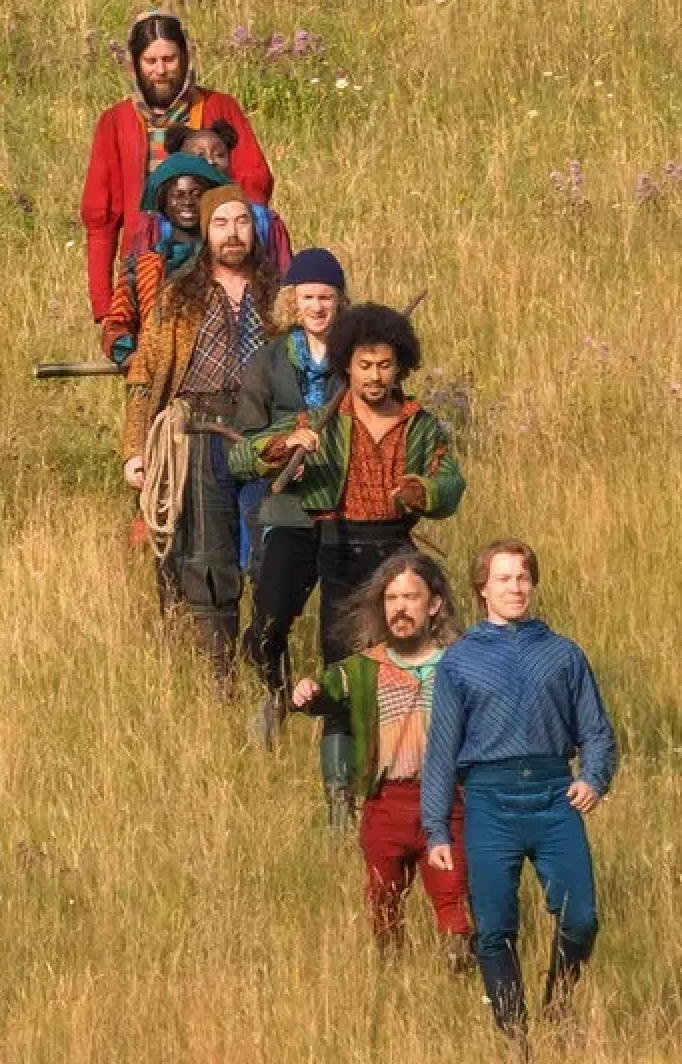
The CGI is Weird weird. Peter Dinklage, help us. W.W.P.D.? Never mind. Someone tell Peter the dwarves don’t live in a cave, they have a home. They may be asexual cuckolds but they have souls. Those “live-action cartoons” do not.
Raise your hand if your movie company makes at least billions of dollars. Okay great. You are not allowed to make movies with CGI until further notice. You are in the dog house, unless they are equal to Avatar. Somebody unfreeze Walt Disney. He may be a freemason in league with the Illuminati, but the guy knew how to tell a story.
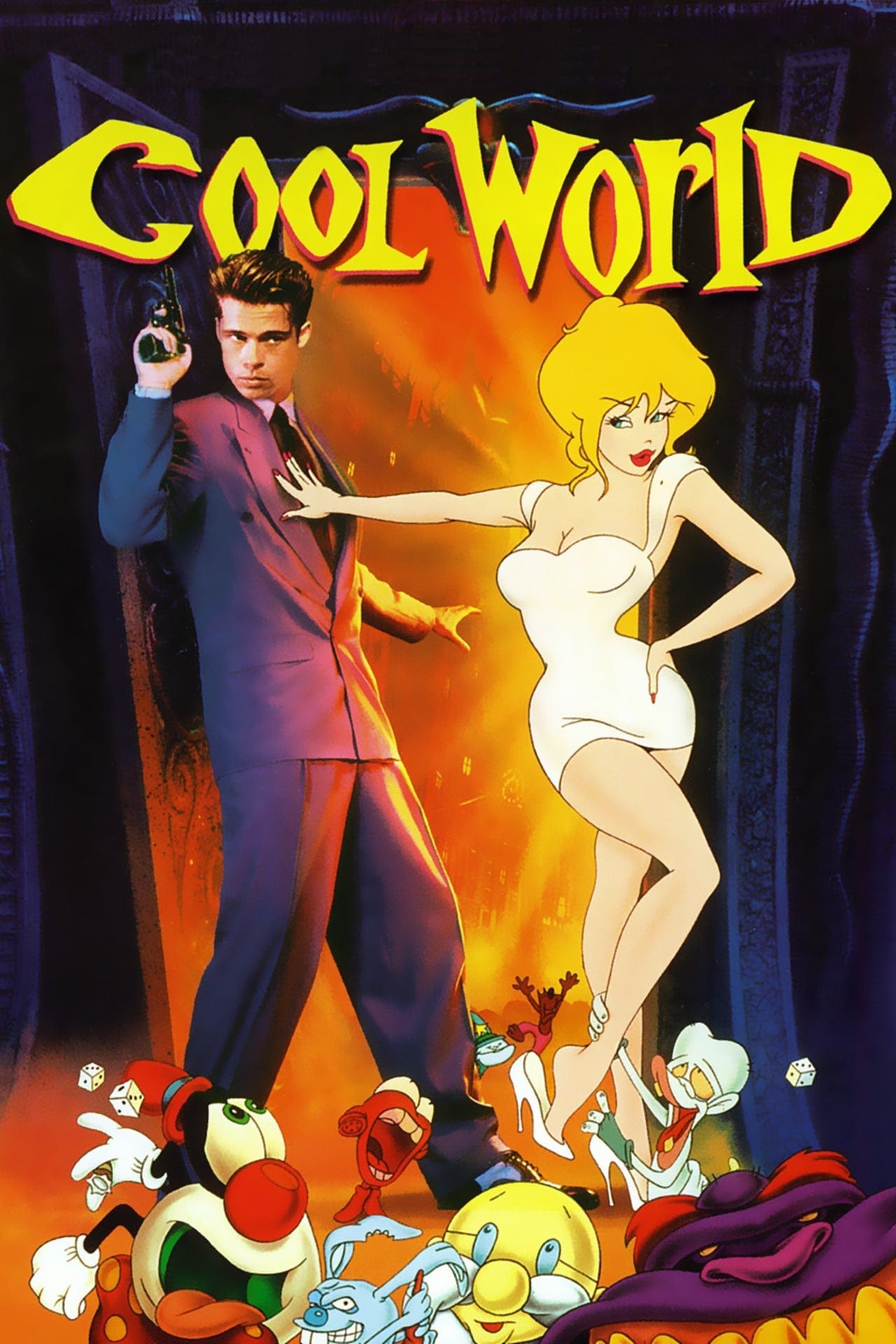
Actors want to interact with real people, to be more connected. The nuance of performance matters and can create new, original, thoughtful experiences. They/we makes the whole film easier to relate to and easier to disappear into. But if I can tell a person is talking to a cartoon, I’m out. Except for Who Framed Roger Rabbit. or maybe Coolworld. And, “how dare you” want kids to eat this sugary garbage and teach that mediacrity when you have more ability.
Is it an agenda, if you aren’t self-aware enough to know it? Is it a mix of self-dillusional gaslighting and agreed reality-shaping?
It’s delusional destructional hypnosis to teach someone immoral or unethical ideals and actions. We don’t teach people to touch hot stoves. We shouldn’t teach people that being “beautiful” is a right to leadership. We should not teach that men and women don’t need each other.
Snow White, the animation was in a relatable real life situation. It pertains to the human condition. What would you do if someone close to you was out to kill you and you had to go out into the wild? There you see a quant house.
But this live action remake says, “It’s how I see the world, not how it is.” They tried to Rom-Com a fairy tale. Think Pretty Woman. Someone once said Rom-Coms are worse than horror movies or porn. And I get it. It’s a soft seduction into an unreality. Of course a street walker could end up with a millionare. In a world where half of relationships end in divorce, what chance does a “lady of the night” have?
By the way, he originally needed directions. We have Google Maps now. And you know, prenup.
Propaganda: information, especially of a biased or misleading nature, used to promote or publicize a particular political cause or point of view: “he was charged with distributing enemy propaganda.”
Telling a good story is not trying to fit every product into political and social molds. You lay the story bare in it’s truest essence. These stories stand for themselves. The journey to “Avengers Endgame” had lots of issues but they did a great job walking the line. Making a movie is near impossible. But they pulled it off with only a little agenda pushing and catering to the audience.
Six: OKAY BOOMERS
Doc: What’s the prescription for shortsightedness?
The past isn’t just old. Updates aren’t always (or even often) good. Cars from the 60’s are built to last longer. Today, so much is plastic and disposable. Respect (listening) for the past is a way to avoid pitfalls and navigate the future. We should help the future, like the past, we ignore, tried to.
Kids blame their parents. People remember the negative so easily. It keeps us alive. Life has always been a little messed up. How easily we forget then disparage the past for trying to remind us. We are better than those who came before? Today is built on the bricks of the past. Youngins have contempt for those bricks we stand on. It’s all of us. We all have this bias. Scientists have contempt for people in grass skirts living in the forest. We (the west) study them at Harvard and steal their poop.
The old Snow White does have many messages. The remake ignores the past and flips the message around. Entitlement over humility. If you are going to “remake” an old story but change it’s meaning, you are hiding the past. You are stabbing it in the back instead of facing the disagreement head on. Wanting love, community, and contributing to society are old values. The current filmmakers would make her seem humble with no gratitude, as her presence is the gift. This would be supreme propagandist brain washing.
New things are important. So are old things. New isn’t better. Old isn’t better. Mozart and Michael Jackson. Keep the babies. Get new bath water.
SEVEN: THE STRAIGHT DOPE
Happy and Dopey
Perhaps there is a range of addictive personalities. The media is good at sugarcoated brainwashing. But, we need to be a “little more dumber “before you force us to eat things like this generically aloof,’superior’, superficial factory slop. We don’t need no education! The media is emotional and mental seduction. Not weaponized drugs. Hopefully we are paying for it and not ”paying for it.”
Movies are not just things people like. People like cats. Put, cats in movie? People like jokes, so to make a billion dollars, put jokes in it? People like sex so put sex in the movie. But these are ingredients, not a meal. People like sugar, right so why don’t we just shove it into our gullets for three meals a day? It rots the brain.
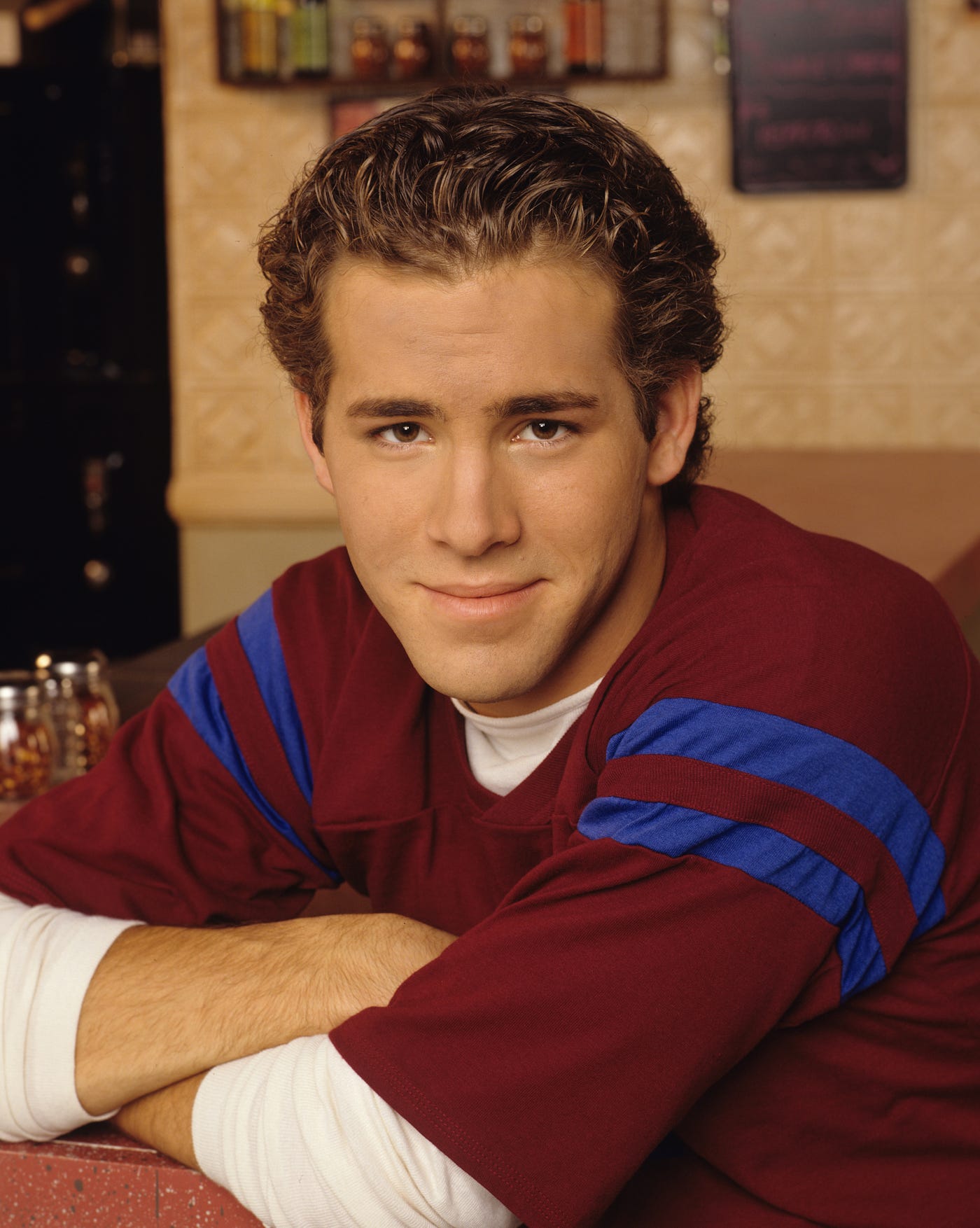
Ryan Reynolds publicity photo from Imdb.com
Ryan Reynolds fought to keep Brie Larson’s Captain Marvel out of the Deadpool 3. He fought to keep the artistic integrity. We need fighters like this. Or you will get this, or Xmen 3, or Willow the series, or She-Hulk, or…you get it.
Superficiality for a cashgrab and/or power influence will produce crap. Stop trying to please everyone. Make a good, true story. Or if you do want to please everyone, do it for the story and not an agenda. Black Panther doesn’t need to emphasize black lives matter. Sleeping Beauty doesn’t need to become a warrior to fight the dragon, because “who needs a prince.” We need a hero.
A song without words can touch the soul. Add words, and you add another dimension of connection (positive or negative manipulation). The image is another. Imagine just eyes gazing, or hands across tall grass. Poof. And then you’re swept away, no identity except the person on screen. Suddenly you are Batman and you believe the story and you like being Batman, smart and brave. Batman makes good choices, like drinking Kool-Aid.
Which Snow White should we have? Should we change our myths and legends? Why? Our stories are how we see ourselves. They are our memory. We choose our memory. What we create is who we are and what children will become. If we are not choosing they we will choose and think for us and we will remember what they want us to remember.
Telly-winning filmmaker & Top 10% Google reviewing writer with a sharp pen and a soft spot for great stories. Film, culture, life — written with wit, grit, and Southern charm.
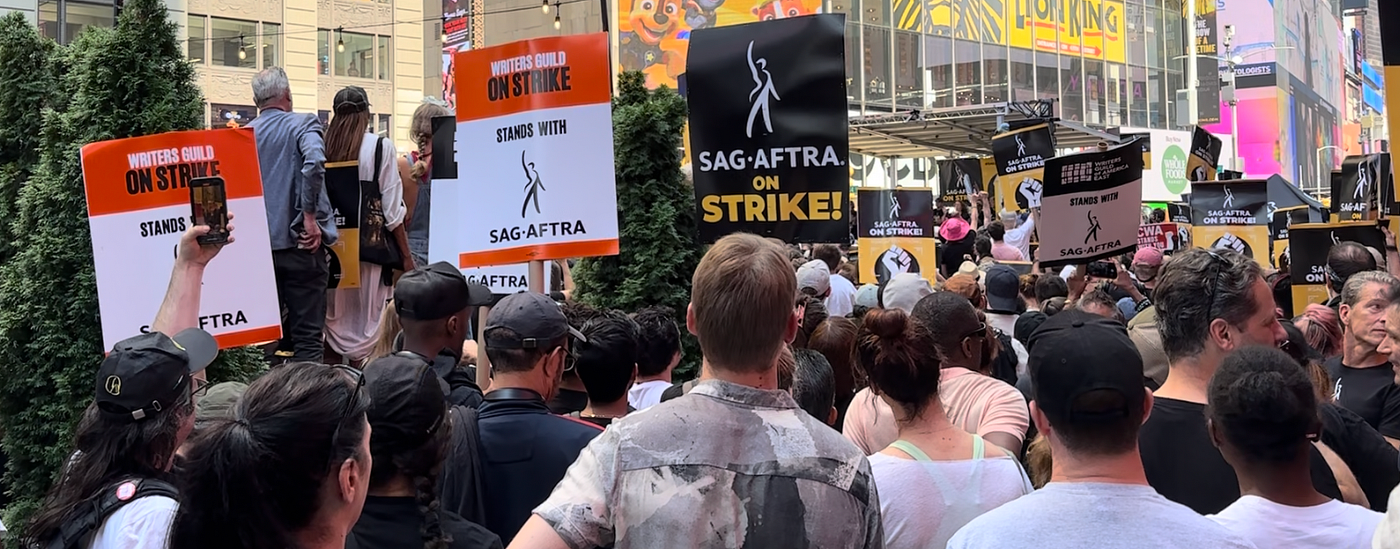
Inside the 2023 Writers/Actors Strike from an…insider.
Photo from Deep Broke
Disclaimer: I work as an Assistant Director, in the Directors Guild of America. On one particular project, I met and became friends with a writer. I asked to interview him.
They shall remain nameless in lieu of the sensitivity of the subject matter.
His statements are a matter of personal point of view, opinion, and in no way reflect the thoughts, opinions, actions, or needs of the Writers Guild of America, its partners, or its subsidiaries.
Before the Beginning
Deep Broke: Make sure you say this. This is the drop you have to put at the top:
Aeric Adams: Okay.
Deep Broke:
“I am not an official representative of the writers guild. I am speaking only for myself. My opinions and analysis are a pure reflection of myself and my own thoughts regarding the strike. These are my observations and they do not represent an official statement of the Writers Guild of America, West or East.”
Aeric Adams: Hey, Deep Broke! How are you?
Deep Broke: I’m Good and I am humbled, today.
A.A.: How Humble?
D.B.: The Writers Guild has a solidarity leaflet with Starbucks. And nothing in this world will humble you more than trying to hand out leaflets and fliers about organized labor, in midtown Manhattan, on a Monday morning, when it’s raining out. Not a single soul wants to make eye contact with you, at all. You get a real sense of your scale in the universe.
A.A.: That is a hell of a morning! You are in the fire. But, I want to build into that. Tell me what you can about you. What’s your origin story?
Who Are You?
D.B.: Alright. I am a writer and producer. I am originally from New York. I joined the Writers Guild [less than ten] years ago. I have a writing partner.
We got our big break working on an episode of an anthology series with [a network]. It was one of their highest rated episodes, so they brought us back to write a few more episodes, for their next season.
We got to know the show runner really well and when it was his time to move on he told the network and producers that my partner and I were good enough to take over the show. So we did.
We produced the entire following season. We were battle tested, because it was under the conditions of covid.
A.A.: How drastic is the difference in the writers room ,pre and post covid?
D.B.: During the pandemic was actually less stressful. People were figuring out how to do things, zoom was still becoming a thing, and a lot could be done over email.
At the height of the pandemic there was actually a nice level of correspondence. When everybody got a handle on it and there were zoom calls and FaceTimes things actually got more chaotic.
A.A.: What was the chaos?
D.B.: It’s very easy to be clear and concise on the page. When you send an email you can edit before you send it. If you are thoughtful, it’s something quick, easy and digestible.
When you are on a zoom it’s the worst of all worlds. You don’t have that grace period to think about what you are saying. It’s a conversation so everything comes out.
You lose the ability to have full body language, so the subtleties in actual conversation disappear. But, all the bullshit that people pick up from a conversation or all the subtext, they take out of it, remains.
We’d be talking to a writer and they’d say ‘I get it! I get it!’ They yes you to death. Yet, it wouldn’t come out in the next draft. Nothing we talked about would be there. In email we just got better results.
Yes, but No
A.A.: Unpack the “yes-man” part for me.
D.B.: This is the unfortunate thing about the industry. We are all sort of conditioned that nobody ever wants to hear no. That is true in life but, particularly in this industry.
There is a notion that if you say “no” you are branded as difficult. So, there is an entire language in this Industry, that has been developed, so people can do so without using the word no.
No one gives harsh criticism.
Instead of saying ‘that’s a really bad idea and you should have never said that, using words, let alone out loud, using English, it turns into ‘Yeah, you know that’s an interesting note, but you know what I am “bumping” on is…’ and then you have to go into why it’s a bad idea.
I’m a New Yorker. My partner is a New Yorker and we are very plain spoken. Like, ‘That sucks.’ And we don’t mean it personally. In a writers room, nothing should be taken personally.
Unless, someone says something about your mother to your face and it’s like ‘F-you,’ none of it is personal. It’s all about the craft. We are all sensitive artists. So, no one takes it this way.
You have to couch it in this bland language of double talk; another reason zoom calls are so horrible. They have to decipher what you are saying.
Writers Room Politics
A.A.: The politics of writers rooms.
D.B.: Yes. There are differences in the types of writers rooms you are talking about. An anthology series is, by nature, sort of singular. Each episode is its own little world.
When you are dealing with one writer it’s a much more intimate relationship. It’s one on one. And what you are doing as a showrunner is crafting that story, with the writer. And serving as an intermediary with that writer, to the network.
Sometimes, it’s successful because you have some good sharp professionals who know how to take notes. Other times, it did not work out. We’d end up having to “page one” the material. The notes we were getting from the network were just painful.
In my first show running gig, my partner and I were also still learning how to take notes from the network. And full disclosure, the network really liked us, they loved our ideas, they loved the work we did, but the biggest problem is that we were horrible at taking notes.
There are these notes where as a writer you say “I don’t understand why they don’t get it!”
A.A.: I see.
D.B.: They will give you a note. And you say ‘Yeah, but what it means is this-‘ And you missed the point where if you have to explain it much it didn’t land on the page. And they didn’t see it.
There’s this saying called “the note behind the note.” It implies sometimes there is a test behind what they are saying and they are trying to give you a deeper note, you need to address.
There is a sense that when you enter the writers room it’s a meritocracy; all you have to do is write dope words or stories. There is actually a skill set you need; all the soft skills on how to manage people.
A.A.: Too right.
D.B.: You were working as a 2nd AD when I met you. You know as well as I do there is a way you have to handle people beyond just doing what you are expected to do.
A.A.: I do. Is this verbal politics different depending on if you are showrunning or writing in the room?
D.B.: Yes. I try to use the “nice no.” As someone who has been and not been on the top I understand it. You don’t want to burn everybody around you. You don’t want to be that guy.
It’s like suburban mom language. ‘Yes, honey I know you really wanted to set that house on fire. But, we don’t do that.’
I worked on this cop show. If someone comes along and says ‘I think the cop should eat a baby, with a knife and fork, live.’ You can’t say that’s a really horrible idea. It’s about etiquette. You have a discussion about it. You treat that person with a whole lot of respect, more perhaps than the idea deserves.
But, there is a value in being honest about stuff that I think gets lost in the industry. More specifically in writers rooms. We are so busy being polite and not hurting anybody’s feelings we end up burning a lot of daylight hours, having discussions about discussions.
Hierarchy Breakdown
A.A.: Spring boarding from there, where are you working as a showrunner currently?
D.B.: Well, I’m not working on anything right now! [laughing]I like to say that I am a professional labor consultant right now.
A.A.: Okay, fair enough.
D.B.: Most recently, I was a supervising producer.
A.A.: As a producer, is that like battling yourself; your writer’s brain?
D.B.: It can be, especially when you are balancing budget and cost against the script and what you put on the page.
A.A.: Does the show runner have a direct relationship with the Writers Guild or is that a separate brain?
D.B.: Well, a showrunner is more of a job description than a title. The title is generally Executive Producer. The title of producer is a demonition of rank.
There’s basically, two separate chains of command.
The Executive Producer is the top. Then there are the Co-Executive Producers, Supervising Producer, Producer, Co-Producer, Executive Story editor, Story Editor, and staff writer. It’s a connotation of rank, salary , and seniority.
Traditionally, a writer will go to set and produce their episode. Meaning, they remain on set to adjust the script for actors, production, or directors needs.
Doing that gives you a better sense of scale, budgetary constraints, how dialogue sounds coming out of people, or how detailed you can be, when you are writing action.
It helps a writer develop the language specifically for production. You have someone to consult and on hand at all times to talk about what you are supposed to be doing.
With that said, there is also the other side of it. Where maybe they are overseeing the budget, or a more specific part of production; nothing to do with how the show was crafted.
Then you have, at the top of that ,the show runner. The Executive Producer rank is usually a writer and sometimes a director who sits at the junction of the creative, the production side, and the network, studio, or both.
These are the people asking the big questions, like how is the money being spent, marketing, or what have you. And they stay on from pre-production until it’s edited, color corrected and popped out.
Feeling Protected
A.A.: Switching gears going deeper into the writers world, how does it feel being in the writers guild? What does their protection feel like pre and post strike?
D.B.: Well, let me say I am in the Writers Guild East. And the culture is different, I hear, from the Writers Guild West.
There are fewer of us. We make up roughly a third of the overall guild members, as I understand it.
I am a dramatic writer. A lot of our members in the East do comedy/variety. A lot of them do journalistic work. It’s a little bit of a different vibe.
Prior to the strike there was not a shit ton of solidarity or community, from what I sensed. But, I really appreciated the protections, the guild got us.
I have always loved and continue to love getting residual checks from the guild. I would rely on the guild for insights into business or practice.
You can always call your guild and ask ‘is this normal? Is this legal?’ And they will always answer you quickly. I appreciated that.
Now that we are in the strike I appreciate the community more. It’s given me more insight into our community, practice, culture. That is extremely valuable to me personally.
Also, when you are in the middle of shit like this it pays to know you are not alone.
What’s the Negative Side?
A.A.: Is your appreciation for the guild always positive?
D.B.; Well, I’ll say this…and the opinions and statements I am about to make are entirely my own and don’t reflect the guild, writers in general including myself are problem solvers.
If you put a dramatic problem in front of us we will think it through to its conclusion. We try to assign motives, agency, character, all these things… It’s difficult for writers as a group to not do that, with everyday practical things.
The strike, as it is ongoing, is like catnip for writers, trying to figure out the motives and actions and everything else that goes on, on the other side of the table. Give us some time and we will think of the craziest shit. And it will all sound plausible. That can be infuriating and frustrating sometimes.
It’s challenging to be in a room full of smart people with big imaginations who are constantly trying to second guess the people we are negotiating with.
A.A.: Can you go a little deeper with that?
D.B.: Well, I’m not going to give any names or anything like that. I will say that everyone is a career analyst.
Everyone has access to Variety, Deadline, Substacks, Newsletters, what have you…every time there is a news article there’s buzz. Everybody starts to chatter about what it means. ‘What’s the note behind the note? What are we missing? What can we do?’
It’s the worst version of the family in the waiting room, when grandma is getting surgery. Everyone is asking why it’s taking so long. ‘What is the doctor doing?-I know what the doctor is doing.-What’s probably happening is this-…’
Eventually, we could imagine Darth Vader being there. Like, ‘He’s the one behind this!’ And we will do it convincingly because we are all writers and we are all good at our jobs.
We have been encouraged to keep the lines of communication open and clean, so everybody knows what is genuinely going on, as opposed to letting everyone’s imagination get the best of them.
Who Speaks for the Writers?
A.A.: Where does the main voice stem from in the guild?
D.B.: We have a leadership echelon that emails to every guild member. These emails often end up quoted in Deadline. Everyone gets to read them eventually. We just read them first.
They are very inspirational. Very clear.
These communications from the guild specifically exist to temper our darkest impulses and make sure there is some sort of light of reason, before we get out of hand and start spiraling.
A.A.: Okay, that makes sense. Spring boarding off of that, what has your experience in the strike been like? You talked about it a little when you first came on. What’s the overall feeling of being in it?
D.B.: Previously[as apart of another union], I’ve worked for organizations that were so egregious they were dragged before the labor board. I don’t feel the level of solidarity I did then as I do now. I am a W.G.A.[Deleted Rank]. I have done far less than many of my peers in that position.
I have been on picket lines where we have had teamsters, IATSE members, actors, even teachers. We had SEIU (Service Employees International Union)people come out. And this is before anyone else was striking.
I was in some pickets where there were more actors than writers in the line[pre their strike].
So, if it’s in terms of how I feel and how my experience has been? It has been tremendous. The fact that you have so many different sectors of your economy threatening to strike or having this level of Labor, on red is [great].
Writers are generally characterized as being bespectacled stoop shouldered nerds who quietly write bullshit and get paid an enormous amount of money for it.
The vast majority of us don’t get paid enormous amounts of money. And many of us get one writing job, join the guild based on it, and don’t work for years or don’t work at all.
We have families, work paycheck to paycheck or project to project just like anyone else. And to see that respected, by like the Teamsters… Historically, management is ‘divide and conquer.’ And this is very different which is fascinating.
A.A.: It’s good that you have that sort of solidarity. I’ve always wondered how the relationship between unions works. How has the actor’s strike been affecting the writer’s strike?
D.B.: When SAG joined us it was like a shot in the arm[boost]! They are coming in 15 times the size of the guild. And, so many of their concerns are similar to ours. It’s so great that we can sit down.
You have conversations with these individuals. I’ve talked to actors who get like fifteen cents! I’ve gotten checks for like thirty-five cents. These are people who are on hit shows! It doesn’t make any sense.
And then, you sit there and you discuss artificial intelligence; leveraged against us. I’ve talked to voice actors. They put you in a room and say this is only for ADR and training purposes. You signed for this. We are going to clone your voice.
The reality is they can have it reading [new different] lines, and you aren’t in the studio, not being paid for it. And that’s wild!
Deep Broke’s Issues
A.A.: What are the writer’s issues most important to you?
D.B.: Reiterating this is what is personally valuable to me and not a reflection of the guild, the negotiating committee, or my partner. For me, it’s that residuals are great, because that’s what writers live off of for the rest of the year.
If the law of the land is becoming shorter seasons, the residuals have to be able to support you between seasons, in order for us to work in this industry. Sometimes, projects are produced years in advance.
If this doesn’t change the churn out won’t be sustainable.
As we spoke about, there is a whole sub language to everything. There are jobs secondary to the main job, you are hired for, that are required for you to do your job well and efficiently. There are things that go along with doing your job.
If there is less of that then there has to be some kind of way to keep people in this industry.
You’re going to have people who work a season on a tv show and didn’t work for six months, so took a factory job. Or ‘I started teaching and I’m out.’ Then, you’ll never have another generation learning.
This is an entire industry that thrives on creativity and originality.
You can use AI to analyze scripts and audience engagement. Or you can have one create a first draft and then bring in writers to finish. They can pay an AI company to just pump out ideas.
The Networks job is to maximize profits for their shareholders. And they will work to do that, any way they can.
But, if you look at what is selling it’s not the cookie cutter stuff. It’s the original ideas that A.I. isn’t able to do yet. Barbie written by Greta Gerwig. Oppenheimer was all practical effects[not cgi]. And, they seem to be aimed at gutting an entire industry, because an executive decides some average output from an AI is “good enough.”
Uncertainty on the Horizon
A.A.: There seems like a lot of uncertainty on the horizon.
D.B.: We are all uncertain. But, what we are discussing is a lite version of what some of the conversations with writers look like now. Part of it is avoiding that dark thinking, when we really don’t know what will happen next and avoiding the worst case scenario.
A.A.: How does it feel talking to the streamers and waiting for an answer?
D.B.: Well, I am not on the negotiating committee. I am just a writer in the guild. On the ground there has been this Kafka-est since waiting.
Every time an executive sneezes the trades jump out with a whole analysis of what that sneeze means and there is no substance to anything.
There is a very real sense of this surreal bidding game. Like two people are sitting across from each other starving to death but neither person will speak to the other. For example, we ask ‘Are you hungry?’ And they act like they don’t hear us. But, as writers we are used to starving. We have greater resilience.
As writers we are not considered a priority, by the executives. But, we are used to this; being asked to work for free, being asked to work long hours, being asked to page one a project, the day before it’s produced, because of the whim of an executive.
So it sucks. It is nerve wracking. We are used to these stretches of not eating and being at the whim of someone, who has a full cabinet of food.
The networks are not used to starving, in the same way. And they are not used to hearing no, and told no, in very stark terms.
When the trades come out with what the guild expresses they call it a gross misrepresentation, as they sip drinks on the beach and eat shrimp cocktails.
The Last Strike
A.A.: How is this different from the last writers strike?
D.B.: I can only tell you what others have told me. I talked to writers that were in the 2007 writers strike. In order of magnitude, the guild is more organized, more determined, and just better at this.
Nobody expected us to have the ability to shut down the amount of productions that we did and that we would have our people in the places, in the way that they were.
Keep in mind, at that time not everybody had iPhones. There were no chats or messaging apps. There were more phone calls, word of mouth, and running around. It was more lax and less fraught.
This time our guys are laser focused on getting shit done and it has shown, in all the results.
A.A.: It’s good that you are feeling results.
D.B.: Well, I’ll say it like this, there is always a panic when you look at your bank account or when you have to look in your kids eyes and explain I don’t know what happens next. It can be hard to keep morale up.
But, the guild is a tremendous boon, to each individual writer. And you know, if one person is sagging you have to hold them up. And that level of solidarity is very encouraging, as this thing drags on.
There is the knowledge that we know this is going to end eventually. This can not go on forever. It’s just a matter of when and what that looks like.
Final Thoughts
A.A.: Final thoughts?
D.B.: It is very easy to look at the entertainment and media landscape and feel this total sense of chaos and no one is at the wheel. All I can say is that’s always been the case.
This is an economy that has faced many disruptions: whether it was going from silent films to talkies, or black and white to color, or the advent of VHS or the DVD, or now streaming. It’s one that has always weathered disruption poorly.
Everyone wants to know where the money is and where they fit into the scheme of things. And there has always been a resolution.
And, as discouraged as we all feel and as much as we like to use the term “existential moment,” there is another side to this. People continue to want what we offer. We will come to an agreement eventually, when both sides can finally speak the same language.
A.A.: Okay, that wraps up my questions. I want to thank you for being a part of this interview.
D.B.: I hope this was helpful and I didn’t just ramble.
A.A. No sir. I think you gave great insight and information to potential writers about the landscape they would be stepping into, living as a writer, and what it feels like, on the inside of the writers strike.
D.B. Well, alright. Take care.
A.A.: Godspeed.
According to MSN and Indeed.com the average writer salary is $69,510 per year.
Before you go see the Barbie movie, know that this is coming from a guy who’s not afraid to call Clueless a masterpiece. Now, let’s talk about why Barbie, with all its pinkness, feels a little… gray.
I’ve always admired Greta Gerwig’s talent, but I believe the jump from indie darling to blockbuster meant a difficult compromise. In Barbie, the pull of the commercial zeitgeist seems to have weakened the very artistic merits a story about a plastic doll could have brought to life.
(light spoilers)
Created by AI by author
Dudes. I watched the Barbie movie. And as a man who loves chick flicks, here’s why you don’t have to.
So, you know where I’m coming from. Movies like Clueless, 10 Things I Hate About You, and even Aliens are high on my list.My Best Friend’s Wedding, Clueless, Fried Green Tomatoes, Pretty Woman, The Devil Wears Prada, Practical Magic, When Harry Met Sally, Bridesmaids, Grease, Sleepless in Seattle, Four Weddings and a Funeral, Sixteen Candles, Love Jones, Titanic… Do Aliens and Kill Bill Count?
I loved Lady Bird. Greta Gerwig is undeniably talented. I think the leap from more independent to big budgets created some new money problems. Following the zeitgeist of popular opinion hurt the artistic merits the film could have brought.
Outside of my disagreements with some of the social messaging, I think it was average and missed some connective tissue that could have made it a classic chick flick.
Why is it average?
It’s a big budget average, in the sense that it’s trying to appeal to a large audience. You have to do your best to find the center of the line of appeal to your target audience. Not that that’s men. Young women are the highest purchasing demographic. Make a project that most women can agree on. Easy enough.
It was clunky in a way where ideas or locations or changes in the story were not unfolding smoothly. For Example:
Ken beginning to change and rule Barbie Land.
The walk at the end with Ruth.
The world or rules of Barbie Land.
Barbie just barks out about death for no reason. I get it was intentional but still…
I gave it a personal C or C+. My better half gave it a 7 out of 10, she won’t be watching again. Initially, I was open to it. I had heard both positive and negative reviews, so I was able to go in with neutrality.
So Many Unanswered Questions!
Connective tissue was left unexplained.
One of the film’s biggest missed opportunities was never showing the actual brainwashing of the Barbies. The film struggles with a lack of connective tissue, leaving key aspects of the narrative frustratingly unexplained. It’s strange that we never see any real manipulation or brainwashing of the Barbies, only our protagonists’ outright lies.
The story also fails to clarify if Barbie’s choice to become human was a personal, cathartic decision, or if she was simply a puppet of the story’s message.Did she decide to have genitals? How much self-knowledge do they have?
Where did Ruth and Barbie walk to when they had their little chat? Could there have been some kind of magical cloud that circled them? They just walked somewhere unnecessarily. Why wasn’t it just in Barbie Land?
Again! What are the rules of Barbie Land? We are never given a clear set of rules for the magical world they inhabit—leaving us to wonder about the fate of other dolls, like the one a dog got ahold of or the ones that were thrown away.
Are there other Barbie lands like parallel universes?If so, what happens to the Barbie that a dog got ahold of, or if a Barbie flies out the car window? Is there a B.C.U.? A Barbie Cinematic Universe?
What happened to that box of Barbies that Mom threw away? Were they sentient and did they die?
Answering these questions could have made for some entertaining scenes, accessible to all audiences.
In an independent you can let some things go and leave it to artistic, personal, subjective decisions/opinions. With bigger projects you have to make the spectacle large to hide the magic tricks. I think it needed more gloss or rouge. Am I getting the makeup terminology right? Rouge? I’m a dude.
Can Barbie be herself if she doesn’t want to join the real world? The message seems to be don’t be a doll, be more, join the real world. Her becoming real could have been a cathartic resolution to something she’s always wanted. Like Ariel in the Little Mermaid animation getting to be part of our world.
It was a nice ending to not give her a specific life or career direction.
But, I found it satire-lite. Not offensive nor thought-provoking to the target audience. An echo chamber. When it comes to the actual message, there was an opportunity to talk about what equality actually means, showing how Barbie Land could become a place of true equality affecting the real world.
Maybe we don’t want to do that.
Could there be more nuance to the 2-dimensional Barbie Land than to the real world, where an average guy doesn’t just slap Barbie on the butt in front of her boyfriend? If they wanted to paint both worlds as 2-dimensional, I wish they had leaned more into it. Enhance how black and white our world is.
His Story.
Okay. This movie is not about Ken.
Ken came back to share information about Barbie and news about the real world. When and how did that message change? It seems like Ken should have been the main villain.
Make him a great villain with a real philosophy you can understand, like Joker in The Dark Knight or Thanos. It doesn’t even need to be that deep. Ken could have had a rant about patriarchy being power and hypnotized everybody. We could see the middle of his thirst for power. Connective tissue.
They used Ken’s love and attraction to the Barbies to make them jealous and physically attack each other and control everything, like a matriarchy. But there was no irony or disagreement. This is how to operate? This is the message? Rule everything, and you can do anything you want to do.
Have you seen that movie where men say they don’t need women and we can do everything on our own? That movie is out there somewhere. I don’t, but I’m looking.
Shafts of Light in the Pinkness
Not that it was all rainbows and no beer.
Two of the great points, aside from Ken’s awesome songs:
the arch of Ken and Barbie’s relationship, seeing him as a human being. This could be a message for the male audience? Although he adores her, and she doesn’t respect him.
the rant that “pulled Barbie out of it.” The plot-changing rant really could have applied to both men and women. There were bits and pieces that were tailored. But both men and women have to traverse dual roads in life, especially when leading. Be nice and stern. Handle the stress and smile. That applies to anyone working towards a high position and who has bosses and/or people to manage.
This film could have been a great opportunity to show a unity not apparent to the “real world.” Could Barbies have affected real-world change?
Is the point to show the hypocrisy of the Barbie world as just the opposite of the real world? If so, that could have landed better, maybe with a joke.
But it’s Barbie Land, and it can’t be equal. Right? It belongs to Barbie.
Which is the problem.
The film pulled its punches, choosing to make a safe, big-budget spectacle rather than a truly incisive satire. It missed opportunities to connect with the audience on a deeper level and, in its desire to appeal to everyone, compromised the very artistic vision that could have made it a classic. In the end, the message of equality felt diluted, the hero’s journey felt unearned, and the potential for a truly thought-provoking critique was lost. You can’t make half a satire.
Once upon a time in a far off New York state…a baby was born in Brooklyn, a one who would always find a way.
Down to Carolina, there he learned to ball. But, bested by his brother… he had learned to fall.
…determination walked those halls.
Embattled by his brother with a determined focused gaze… the boy began to practice… each and every day.
Anytime and any place. Ask anyone how MJ did at the end of his high school craze.
Practice every angle. Practice every line.and every spot. Practice impractical shots… because…maybe… and because why not.
Push and Practice with the left and with the right. Practice in the darkness to get the feel even with no light. ..and perhaps you’ll get to the place where MJ did one night.
One year later emerging on the court, Black Mamba came walking, about to change the sport.
Top of the hill at Chapel Hill. Go see 23 said Sue… said Bill.
The kid he flies by sure act of will …and no one can stop him. The kid he kills. He ran and jumped and strode. He’d glide! He’d spin then jerk and I swear he flied. He’d dunk before you even blinked. And when you thought you had him…. another shot he’d sink. Bobby Knight said most amazing! The kid he’s trail blazing!
Look! He’s climbing watch him soar! The crowd roars! Watch out! He bumps his head on backboards.
Top 3 pick in the draft? For real? Now thats a steal! Chicago wasn’t winning; but here a new beginning. Losers became legends, MJ willing.
Leave nothing on the court. Find the game in your head. What did he say? Make him sorry it was said. Be poetry in motion. Stir up a commotion. Beat them into submission with emotion. Get up again if you fall. Remember the ball. See without seeing. Feeling is believing.
Even in the first practice his team saw the shine. He always picked the hardest player to dominate on the pine.
Boom! Empty stands got filled. Rookie year he willed… ..his team to the playoffs, just like Lebron. 49 points he scored. But the Boston Celtics won.
Game 3 he hit 60, setting a NBA record score. Sublime! Game goes into overtime! But, alas they wouldn’t make it…Boston takes it by four.
Next year he came back, ready for war. MVP of the league. Winner of the dunks. Settling scores.
On to the Olympics. Of course it was time. On to the world stage to be lit from the shine.
But darkness looms close. as it does to success; Testing your metal. Testing your chest. Wolves always want who seems like the best. The fates say “He mocks. he laughs. He jests.
He thinks he’s better than them all Send him dragons to fight; we will see who will fall.
Make it known across the land here comes a weakling for the throne! Alert every dome.
Tell every shooter and dunker; quick ball handler! Tell every trickster and mixer and quick footed dancer. Alert every thug with a ring and the muscle. Alert all the fighters who like a good tussle. Let them know one thinks he has the throne.
And come they did, the wise, the short, and tall; some of the biggest monsters to ever run the ball.
Jordan was in for a fight. But, there is a gift he is willing to give, his all. Gotta find a way. Gotta find a way!
He’s on fire! He’s fuming! But, the bad boy Pistons are looming. Juggernauts in the game. They are known for pummeling players, causing bruises and pain.
But first came the Cav’s Last time Bulls came in 2nd. Time to check em. 3 secs left to win. Mike shoots; Bulls alive! Bending opinions like Beckam!
Standing tall. No longer losers of the NBA. You have to remember you can always find a way.
You think the Pistons are weak? Think that they are push overs? Check the Isiah Thomas movie. Even the great Celtics had to move over. But, they had never met Jordan, superman undercover.
Unstoppable in the air but the Pistons were persistent. This is about the time the Jordan rules were invented: “Put him in the dirt. Make him hurt. Make him bleed. If we put him down hard thats all the edge we need”
Dirty tricks they would pull and in the end they beat the bulls. Game 7 in the sand. More power, the demand.
In the team confidence broke but in MJ a new fire was stoked.
Time to get tough. Put on weight and muscle. We already have the talent and the skill and the hustle. And come back they did to embrace the tussle.
Flagrant fouls! The audience wept. In the end the Pistons were swept. The 2 time champions had nothing left. No breaks. No handshakes.
And the Bulls were the Champions, but wait theres more. A Magician is coming whose moves you’ve never seen before…
All he can do is score the papers said. Ha, What a bore… But, can a title he win? The people demand more.
MJ changed his strategy. He wanted the papers to see. His will is strong. A heart that pumps and needs.
And here we have the match up of the decade with Magic Johnson on a rampage.
So, fluid like a ninja he moves the ball around. Too bad you looked left cause on the right he took you down.
Or right he beats you left. Up then down. He’s a trickster but not a clown. But, MJ against the Lakers? The Lakers go down. Magic, still a king, acknowledges the crown.
Hand checked to death, learning the league. Optimal human with a passion to succeed. Now Celebration! Dance and sing! Shining on a finger a championship ring!
Once, then twice, 3-peated, four, … a 5th in a row and can you believe…one more.
Statues were made, and shows of course and ten story billboards 10 stories high reaching down to the floor!
How’d he do it? A legend gives more. Then losing a father. Then leaving the game. Wait taking up baseball? In… sane…
What would you do? He had to try something new.
I think in the end he didn’t like the hat. Sold out seats on the day he came back!
Dominating in skill and will. Driving to the top. Breaking records. Can’t be stopped!
Past Miller and Malone Isaiah and Magic. Past Byrd and Patrick. Young Kobe and Shaq. Its a fact… he floated above them all. The commotion? Poetry in motion. A King amongst kings. Holding six rings in the hall.
So, remember children…where theres a will there a play. And remember Michael Jordan ,..for he always found a way.
Death can be literal or figurative. A walker on a tightrope, with no safety net (the guy who walked between the world trade centers and lived), Nascar drivers, and astronauts. In the figurative sense, it’s like people who go into politics, or go on stage in theater, or give a speech in front of a large crowd. You risk yourself; your ego, in the willingness to face whatever comes. You give yourself in sacrifice to the moment.
Do you fear being hated, disliked, or mocked? If you do, remember people will thumbs down a laughing baby, or a mother , singing to that baby and bringing tears to its eyes. Take the hate, with a grain of salt. Don’t try to impress those people. Accept their hate.
The Cliché of Fear and Desire
Fear is a fuel. Love is fuel. Pure focus and power are the gifts they bring. They can be opposing. But, together their power is incalculable. Jordan Peterson , a wiser man than me, spoke on how to best the one who came before you. And what if their score was near perfect. He said to dance on the edge of chaos. Throw caution to the wind. Wild abandon.
“Be a Monster.” -Jordan Peterson
Sometimes the risk is your actual life. Most times it’s any level of emotional, or social deaths. You risk ridicule in the court of public opinion. And ridicule is everywhere. It’s the easy button. It’s easier to critique something made out of thin air, than to create something open to ridicule by seven billion people, with internet access and Twitter, I mean “X”.
“Be not afraid of greatness. Some are born great, some achieve greatness, and others have greatness thrust upon them.” — William Shakespeare
Some people say ‘don’t be afraid to fail.’ I say be afraid. Be afraid in a real and grounded way. Use it. Fear it enough to research and learn any pitfalls. Fear it enough to study every angle of your problem. Fall asleep coming up with backup plans and solutions. Fear it, until you love it.
Enjoy the Ride
No one wants your mediocrity at any level. This is something I say to myself. This is from listening to so many speakers. This is from listening to Michael Jackson at the end of his documentary, “This is It” saying to his band, some of the best musicians in the world, that you have to work from love. This is the separation from extremely good to great. Enjoy the ride of what you’re doing and walk the tightrope without a net.
Average, Mediocre, It’s Fine…
That’s what makes A.I. writing so bad. It’s averageness without the personal (painful, soul wrenching, stomach turning, tear jerking, belly laughing until tears, connecting, angering, inspiring) touch. A.I. has no fear or love which creates the personal touch humans need to be captivated.
Are you regurgitating someone else’s work without a piece of you in it? Are you writing a Piece that doesn’t make you cry or a comedy that doesn’t make you laugh? Many times a bad movie is better than an average one. I would rather watch a fan film of any of the original three Indiana Jones movies than Crystal Skull or Dial of Destiny. Their mediocrity is in the story telling. Let me guess how it starts…is he captured by Nazi’s?
Hereditary Power: Kings and Paupers
You don’t know you can achieve greatness if you don’t know, or believe greatness exists. Imagine, no fear of losing, what you didn’t earn.
Of course I will always be flying in the sky. The sky has always existed. I am the sky. Who is hungry? Let them eat cake! (Marie Antoinette didn’t say that).
Kings, presidents, movie star’s kids may have greatness or seeds for greatness thrust upon them. This power is hard to control without understanding where you are, in relation to society. Not being grounded they are born in the opulent sky and are told about the ground, where mere mortals live. They aren’t afraid to fall. They aren’t afraid of the consequences of failing.
How thick is their skin compared to someone, climbing up from poverty, or bullied in school, or was a victim of domestic abuse and had to survive. They had to fight to get out, in a way that was meaningful to them. This fire can be useful.
Their fear was lived, they chased their love and a great artist can recall it to help us on our own journey, to show we are not alone in our struggle and it can mean something.These people I want to hear, as long as what they are saying feels true. As long as they play from their heart.
The opposing side is like one who only knows the ground. Or a cave. It’s Like the Allegory of the Cave. Someone you trust has to tell you out there is another world and a whole massive sky. Both have their own battles in seeing and accepting the world.
The “Social Path”
Sociopaths, who only want power, can become powerful because of their lack of empathy. Ruthlessness can be repaid with power. The willingness to be bold, and not caring what people think is a massive aid. But, they have nothing to lose. And you can beat them.
Reversal: Having nothing to lose and no fear and massive love can be nearly as strong. The same can be said for having no love and a yearning desperation to not fail and everything to lose. I am speaking from the point of view as one who has lost, but studies greatness, which does not hide. My fear and desire may wane but I feel much more alive when I am focused and there is a battle where I have something to gain and lose.
Begin, and don’t worry if the first draft isn’t perfect. I wish I could see the greatest things first drafts. There’s beauty in there somewhere. Find your beauty and jump into the abyss for love.
Buddha’s Balance
The fear in danger can be chronic. It can lead to anxiety. Fear is a natural development of existence, as an animal in the food chain. Hunt or be hunted. Humans are killed by lions, tigers, and alligators today. We need fear, not anxiety.
Stress is a tool to survive. But, anxiety is disintegrating.
Love is a tool. Obsession can be beyond distraction.
But, Playing it safe isn’t safe.
Life is fair (not fair) equally. Safety is not guaranteed. The Lion can still eat you. And mother nature loves predators and prey. If you fight, and you have to fight, you might as well fight with everything.
Reversal: There is something to be said about not fighting and just focusing on your goal. Have a meditative posture and focus on what you want with non-attachment. Non emotional will.
BOTANY (of a plant, especially a xerophyte): having thick, fleshy leaves or stems adapted to life in a dry or physiologically dry habitat.
Xerophyte: any plant adapted to life in a dry or physiologically dry habitat (salt marsh, saline soil, or acid bog) by means of mechanisms to prevent water loss or to store available water.
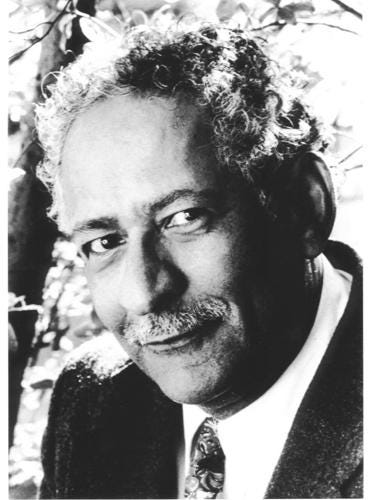
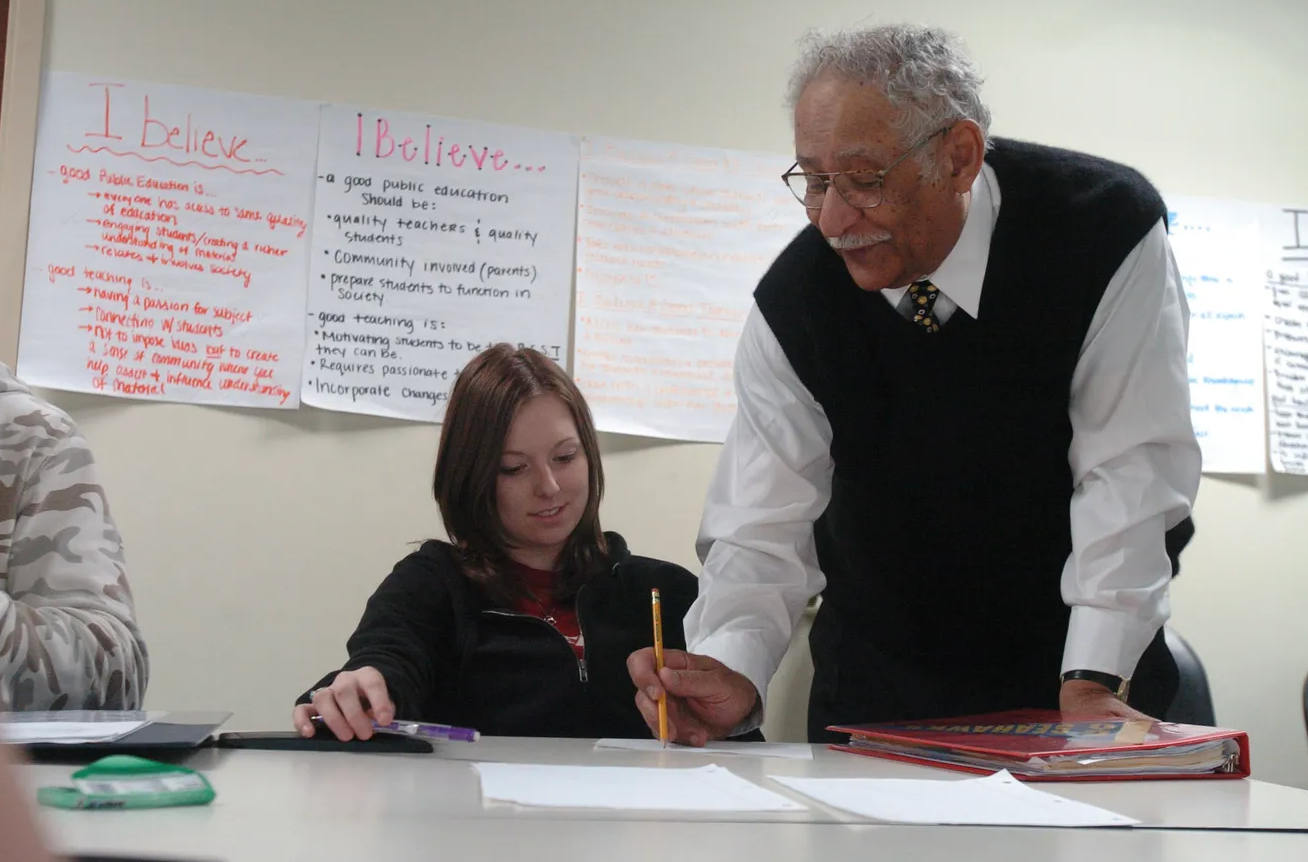
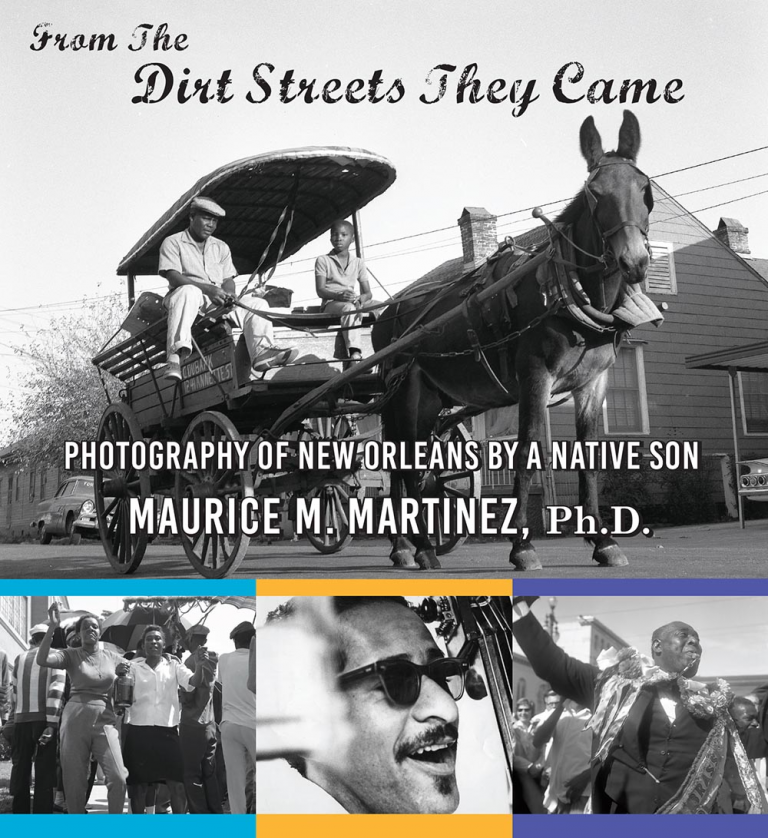
“The Black Indians of New Orleans” documents large, bright, colorful costumes and cultures. This was one of Dr. Martinez’s early works, before our dynamic duo. It’s an excellent example of his own character. Colorful, hunter, professor, musician, documentarian, writer, poet, and dirty joke teller. He is one of the most frustrating people I have ever had the pleasure to work with. I looked up to him. I was his editor.
He stomps his foot with a furrowed brow. I’m cutting “No Teacher Left Behind.” The timing of an edit was off. I had just made the edit to see if it worked. It was nothing. I’m a fast video editor, and since you don’t have to cut with scissors anymore, you can try a lot more quickly. We saw it for the first time.
“That’s not right!”
“I can fix it in 30 seconds.”
He is an artist and sensitive about his work. So, am I?
“That’s not right!”
“Okay! I can fix it. “
Once ‘fixed’ he’d laugh warmly and say:
“Work out funky fingers! Work out!”
His first film was shot and edited on real film, like Kodak. So, he was probably having flashbacks, like in Vietnam. If something went wrong, it would take hours, days, or weeks to fix it. That didn’t make it less frustrating.
“Colored White Boy” is a documentary about a Caucasian man who found out he is also African-American. I loved the subject matter and was happy to work on it with him. Usually.
‘Calm down; it’s fine’ was a constant phrase. “Like the pancake said to the flapjack, stick with me, Jack, and you’ll go places.” He tells a bad joke that I’ve heard him tell 100 times. Why am I laughing at that? I shake my head and tell him I am still mad. We laugh.
Editing is like paint. You are painting with time and emotions. Or maybe it’s more like cooking. All this creates a cohesive “meal.” You can add meat or spices or take some away.
At school, I had learned all the tools. I could edit anything. What I had lost and what he reminded me of was that food, aka visual or auditory pieces, are an experience at every moment. You can tell if something is off or could be improved. This isn’t fast food, and a low budget doesn’t mean less entertaining.
It was like I had been taught how to make Fast and Furious but had forgotten what makes a moment great or a unique experience, like in Shawshank Redemption. He reminded me of the art. “That’s not bad.” meant “That’s not good.” or “Can we do better?”
We tried the weird. If we needed a shot, he would rather go out and get it himself! We threw stuff at the wall to see if it worked. We edited like jazz. He encouraged me to be experimental with my editing and artistic challenges. It was exciting! We even mixed jazz and classical music once. Somehow, it worked. And through emotion, we discovered new things.
Colored White Boy had a showing at the U.N.C.W. where he singled me out. I’m reminded that I’m shy, if proud.
Later, he had a celebratory get-together at his home.
He lived off the sound in Wilmington, NC. A place where you can often smell the salt water or the damp decay of the marsh. Moss hangs from all the trees, and at night, there is a crisp breeze from the water. Wilmington is haunted by the ghosts of it’s violent past. Sometimes it feels like the spirits are still alive in the air. Some parts feel like New Orleans, like Savanna.
Jumping live blues was coming from inside the two-story house with the two-car garage, full of father/husband projects and the needs of a hunter.
His beautiful wife greeted me when I knocked. Delicious smells filled my being as she opened the door.
“Hm, yum…”
“It’s boar!” She said.
“Boar?” I said.
“Yes! And venision. He got him last week. “
“Got him?”
“Well, shot him. We eat what he gets.”
This is interesting. He is interesting. Everyone says that. And he was.
That party was too great, cozy and full of life. It was a jam session.
The live music was from a local blues man, “Wolf,” who helped score part of the movie. Maurice had all kinds of instruments from all over the world. Even I got to play an African drum with some real musicians.
There were a range of teachers, other musicians, one editor, and a wide range of ages and cultures there. No one there didn’t have an interesting story or personality. It felt like a community. People are eating good food, drinking, laughing, and having spicy disagreements. It was great. There was no sense of exclusion at all. Like, almost every evening should be like this.
This was the party of a man from New Orleans. And everything was delicious. Succulent. This night and every party he threw was like this. You don’t want to leave. But no one can sing all night.
I was 22 and just out of film school. I’m not sure of his age, but he was about 10 years from retirement.
Photo from StarNews 2009
When he retired, I helped him move out of his office. He said he was going to use his time to get fit. He said he had been eating too well for years. We talked about Ethiopians winning all these races. He showed the reason: a distinct running style that emphasized leaning forward, using gravity for torque.
“I’m going to show you how to run fast.
He jogs quickly down the sidewalk.
“See?”
“I do not.”
“Helps you go long distances. You’ll see.”
We get his home editing office all set up. It feels weird. He picked up a few things editing with me and was going to try to do more on his own. I had moved to Atlanta, a six-hour drive from Wilmington. I couldn’t just drive and help all the time. But he could call me if he needed me. He told me about his retirement party coming up in a few months. I would love to go.
But I was being ambitious and took a short job instead. I still feel guilty. I missed that party.
I feel guilty that I didn’t visit him more. I wish I had told him how much he meant to me and how much I had learned from him about life and art. I want to tell him how much I miss his stories about jazz greats and other legends. I miss his jokes.
I wanted to make him proud and come back to him with something great I had done. I wanted to go to another party.
Cover from: Louisiana Music Factory
Poor Boy
A po’ boy (also po-boy, po boyderived from the non-rhotic southern accents often heard in the region, or poor boy) is a sandwich originally from Louisiana. It traditionally consists of meat, roast beef, ham, fried shrimp, fried crawfish, fried catfish, Louisiana hot sausage, fried chicken, alligator, duck, boudin, and rabbit, among other possible ingredients. The meat is served on New Orleans French bread, known for its crisp crust and fluffy center.
Itwas at the end of a 13-hour day at work when I got a text from my mother. It showed his passing in the paper. I had missed it. I could suddenly feel breezy Wilmington inside me like a humid night. I missed my chance to make him proud. Some friends toasted glasses of whiskey with me that night in his honor, while I told stories of him.
He was on the radio in Wilmington all week. Dr. Martinez was the host of a 15-part series on National Public Radio, “North Carolina Blue Notes.” His documentaries were played at the University of North Carolina at Wilmington.
Photography by Maurice M. MartinezMrs Jessica S Crawfish Étouffée Cast Iron And Lace A Cajun Recipe Lifestyle Blog
In the case of the Creole version of crawfish étouffée, it is made with a blond or brown roux, and sometimes tomatoes are added. A blond roux is one that is cooked, stirring constantly, for approximately 5 minutes to remove the “raw” flavor of the flour and to add a slightly “nutty” flavor, while a brown roux is cooked longer (30 to 35 minutes) in order to deepen the color and flavor.
“Romance without finance is a nausance!”
I’d fallen in love with a girl, Nina, and she travelled with me to New Orleans for his service. I was hot and cold. I was angry and sometimes despondent. I may have fed into a few arguments. I appreciate her love and patience.
We left in the afternoon for a bittersweet road trip. We had both always wanted to go to New Orleans.
Also, we stayed at the most interesting Airbnb:
Most interesting airbnb: Photo by Bill Æric , writerMost interesting airbnb: Photo by Bill Æric , writer
We arrived late to the wake. We sat near the back. Even though we were two hours late, people were still getting up steadily to tell stories about him. Again, they were all interesting. And everyone would chuckle in recognition of his soul and spirit.
I hate speaking in public. I felt like I owed it to him. I wanted to speak out for my friend, like that scene from Dead Poets Society or Dances with Wolves.
When they asked if anyone else wanted to go up, I felt the pull and stood. I walked to the front. I looked down from the mic and made eye contact with Mrs. Martinez.
“Hi, I’m Aeric and I was Maurices’ editor.”
I hear his wife whisper, Oh my God, in a way of loving surprise. It had been years. And I let the guilt flow out of my eyes and words.
“He was so frustrating! And I miss him. “
I see his son, who went to high school with me.
“He was so proud of his children. He said one thing he could do is make beautiful babies. I thought I had more time…”
I said my peace and came back down. Mrs. Martinez, Lu, gave me a hug and said thank you. I sit back down next to Nina, who gives me a tissue.
Alligator
Photo by Bill Æric , writer
Fried Alligator: First, heat a large skillet over medium-high heat. Add enough oil to coat the bottom of the skillet, then add the alligator pieces. Cook the alligator for 3 to 4 minutes per side, or until golden brown and cooked through. Serve with your favorite dipping sauce.
Nina and I went to the funeral the next day. There was a jazz band. We stayed for the full service and then walked around the city, eating different foods. In the morning, we did the same thing, eating good food and seeing interesting shops and items for sale.
Interesting items for sale. Photo by Bill Æric , writer
So many flavors for my senses in the shortest amount of time. I ate the best food in the world. No one will doubt the greatness of New Orleans cooking. But I had no idea. Every meal was wonderful.
For context, I have had other great food that compares, but if it’s a 10, it can’t be surpassed. So, sometimes things have to share greatness. Michael Jordan, Muhammad Ali, Alexander, and Akenoten can be great. Some people and things can’t be surpassed. So, they settle into my mind where all great things go to haunt me, like some nostalgic Instagram, teasing and doping me up to remember places I can never quite get back to, sweet vaporous memories, and smells of succulent food.
Jazz Mass October. 15 at Corpus Christi Church, 2022 St. Bernard Ave.
Photo by Bill Æric , writer
Burial in St. Louis Cemetery №3 at 3421 Esplanade Ave.
Photo by Bill Æric , writerPhoto by Bill Æric , writerphotograph by Mallory Cash
“Like the pancake said to the flapjack ‘stick with me Jack and you’ll go places!”